A buyer under contract on a 1920s Craftsman bungalow near Hyde Park Village recently asked her insurance agent about the roof. It was original, patched more than once, clearly past its prime. The agent mentioned a new state law taking effect July 1 that would stop carriers from dropping coverage over roof age alone. She relaxed. She shouldn't have.
That law does not exist. House Bill 815, the measure most often cited as the fix for Florida's roof-age insurance problem, died in the House Insurance and Banking Subcommittee on March 13, 2026. Its Senate companion, SB 808, never advanced past a committee referral in December 2025. Neither became law. Yet a search for "Florida roof age insurance 2026" turns up a wave of contractor and insurance-agency blogs stating flatly that the bill took effect this July. For a buyer comparing a bungalow in Hyde Park against a bayfront estate on Davis Islands, that confusion has real dollar consequences.
What the Legislature Actually Did
Start with what's true. In 2022, during a special legislative session convened after years of roof-age non-renewals, lawmakers passed the protection that still governs Florida homeowners insurance today: Florida Statute 627.7011. It says an insurer cannot refuse to issue or renew a standard homeowner's policy solely because a roof is under 15 years old. For roofs 15 years or older, the homeowner has the right to get an inspection showing at least five years of remaining useful life, and if that inspection holds up, the insurer has to keep the policy in force. That statute is real, current, and enforceable right now.
What died this spring was the expansion of that idea. SB 808 and HB 815 would have extended the 15-year floor beyond standard homeowner policies to cover condo associations, landlord policies, and other residential structures, and would have required insurers to distinguish between steep-slope and low-slope roofs before demanding replacement. Both bills carried a stated effective date of July 1, 2026, which is almost certainly why so many roofing and insurance sites started publishing "the law that takes effect this summer" content well before the House subcommittee killed HB 815. The effective date got baked into dozens of articles before anyone checked whether the bill survived committee.
For a buyer in South Tampa's historic districts, the practical upshot is this: the protection you have is narrower than what a lot of the internet is telling you. It covers the roof on the house you're closing on. It does not (yet) reach the condo building down the block or extend the same logic to every residential policy type.
Same Peninsula, Different Roof Math
Hyde Park, Davis Islands, and Palma Ceia sit within a few minutes of each other on the South Tampa peninsula, and buyers routinely cross-shop all three. But the roofs underneath these historic facades are not equivalent, and that difference matters more than the listing price.
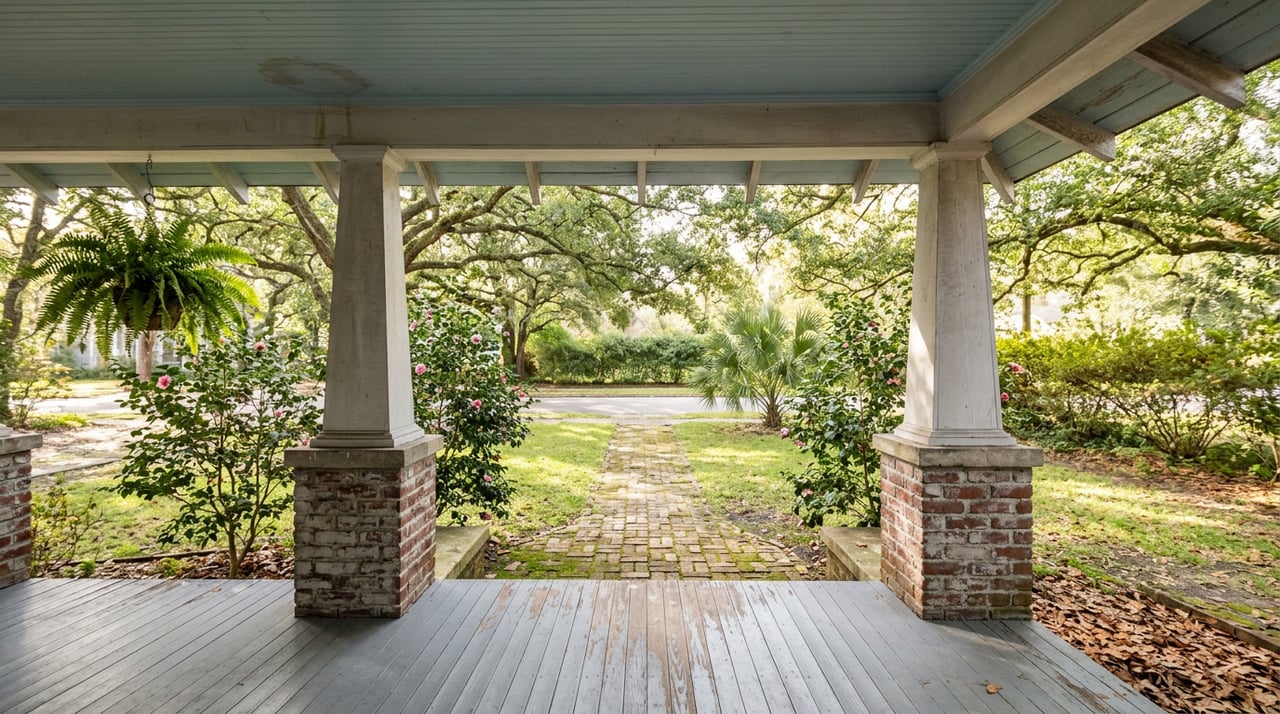
Hyde Park's defining architecture is the Craftsman bungalow: original wood-frame construction, deep porches, exposed rafters, built-in cabinetry. Restored examples on desirable Hyde Park streets are trading between roughly $700,000 and $1.2 million. Many of these homes carry asphalt shingle roofs installed during a renovation, and architectural shingles in Florida's UV exposure typically last 15 to 20 years regardless of their marketed lifespan. A shingle roof installed in the mid-2000s is now old enough to trigger Citizens Property Insurance's roof inspection requirement, which kicks in at 15 years.
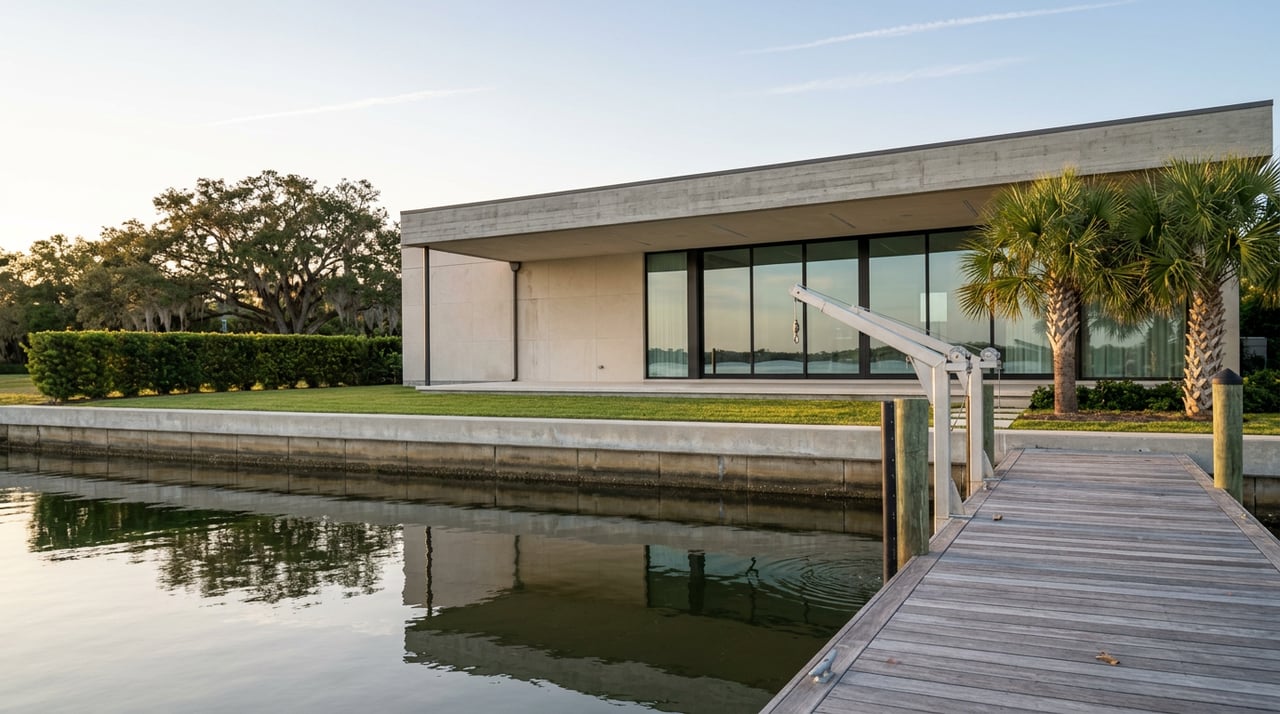
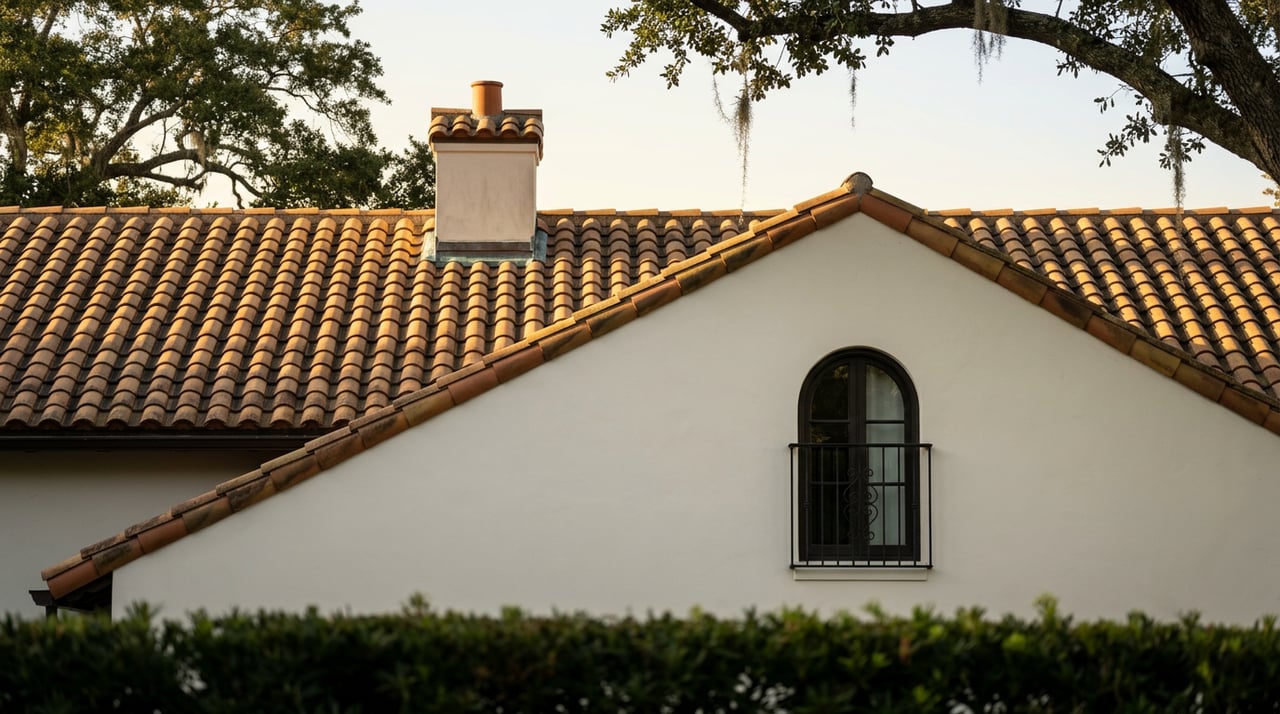
Davis Islands, by contrast, leans Mediterranean Revival: terra cotta tile roofs, stucco exteriors, arched doorways, the same style and material that also shows up in Hyde Park's older Mediterranean Revival pockets alongside its more common bungalows. The median listing price on Davis Islands sits around $2.2 million, with a median sale price closer to $1.08 million, a gap wide enough to tell you the range of homes actually moving. Entry-level, non-waterfront homes start near $800,000, while bayfront estates with deep-water docks trade between $3 million and $8 million. Original clay tile in this style can last 40 to 50 years, with the underlayment beneath it refreshed roughly every 25 years rather than the tile itself replaced, a specialty repair one Hyde Park roofing crew documented on a 1925 Mediterranean Revival home in the district. A tile roof at 60 years old with documented underlayment work can be in better underwriting shape than a shingle roof half its age.
Palma Ceia, centered on the historic Palma Ceia Golf & Country Club established in 1916, runs more Colonial Revival: symmetrical facades, columns, larger footprints often between 3,000 and 5,000 square feet. Roof age and material vary more here because many of these homes have been substantially renovated over the decades, which means the real underwriting question isn't the neighborhood, it's the specific roof.
The pattern across all three: sticker price tells you almost nothing about what a carrier will charge to insure the house. Roof material and documented age tell you almost everything.
What Actually Trips Up a Closing
Roof age is only one line item on the four-point inspection that most Florida insurers require before writing a policy on a home built before the late 1990s. The inspection covers roof, electrical panel, plumbing, and HVAC, and the threshold varies by carrier, some set it at 25 years, some at 30, and Citizens specifically requires a roof inspection at 15 years regardless of the rest of the four-point review. After the 2024 hurricane season, several carriers that had loosened their underwriting tightened back up, so a house that cleared a four-point inspection two years ago is not guaranteed to clear it today under the same carrier's current standards. The report itself is only valid for one year, which matters if a closing slips or a buyer switches lenders mid-transaction.
In South Tampa's older housing stock specifically, a handful of issues show up again and again. Federal Pacific and Zinsco electrical panels, common in homes from the 1950s through the 1970s, are almost always flagged and often require replacement before a carrier will bind coverage. Polybutylene plumbing raises the same kind of immediate red flag. None of these are automatic dealbreakers, but they are exactly the kind of thing a buyer wants to know before writing an offer, not after the inspection contingency deadline.
One piece of the framework did actually pass. House Bill 1611, effective July 2024, expanded the list of professionals authorized to certify a roof's remaining useful life to include licensed roofing contractors alongside the general contractors and home inspectors who could already do it. That expansion is real and current. It is simply narrower than what SB 808 and HB 815 would have added, and it applies within the existing 15-year floor, not a broader one.
What to Ask For Before You Write an Offer
For a buyer comparing Hyde Park, Davis Islands, and Palma Ceia, a few questions do more work than any amount of online reading about pending legislation.
- Ask when the roof was last fully replaced, not patched or partially repaired, and ask for the permit or invoice, not just a verbal date.
- If the roof is 15 years or older, ask whether the seller has a recent useful-life inspection on file. If not, budget time and cost for one before you waive an inspection contingency.
- On any pre-1990s home, ask specifically about the electrical panel brand and the plumbing material. Roof age gets the attention, but a Federal Pacific panel can hold up a closing just as easily.
- Get a quote from your own insurance agent before you're locked into a timeline, since carrier guidelines differ and shift through hurricane season, and the listing sheet will never tell you what your actual premium looks like.
- Order both inspections. A clean four-point report tells the insurer what it needs to know. It won't find the mold in the attic or the cracked beam in the garage, that's what a full home inspection is for.
Frequently Asked Questions
Does a home's age alone make it uninsurable? No. Florida law currently protects homeowners from non-renewal based solely on a roof under 15 years old, and for older roofs, a certified useful-life inspection can keep coverage in place. Age triggers a review, not an automatic denial.
Does clay tile guarantee a lower premium than shingle? Not automatically, but it often holds up better over time if the underlayment has been maintained. A 60-year-old tile roof with documented underlayment work can outperform an 18-year-old shingle roof in underwriting, which is the opposite of what most buyers assume.
Could the broader protections in SB 808 and HB 815 still become law? They could return in a future legislative session, but as of today neither bill is in effect. Any claim that they already are should be verified against the current Florida Senate bill tracker before it factors into an insurance decision.
Roof age is one of the few facts in a South Tampa purchase that a buyer can actually verify before making an offer, if they know which question to ask and which law is real. If you're comparing a Hyde Park bungalow against a Davis Islands estate or a Palma Ceia rebuild and want a second set of eyes on what the insurance math actually looks like before you write, James Heeley is a call away. Let's Connect.